

Performance Data
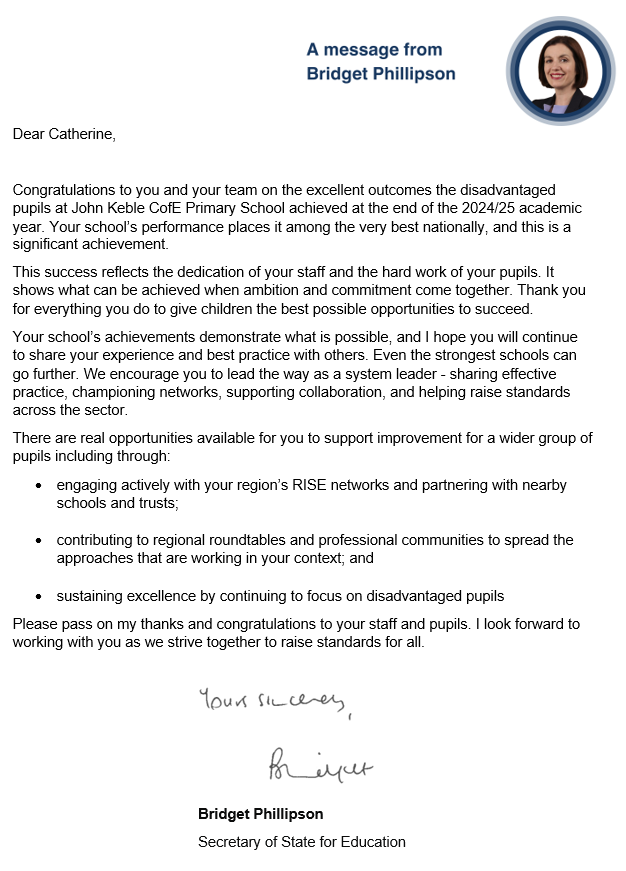
The tables below show the latest available attainment data for the children at John Keble School. We have included key headlines to help you interpret this information.
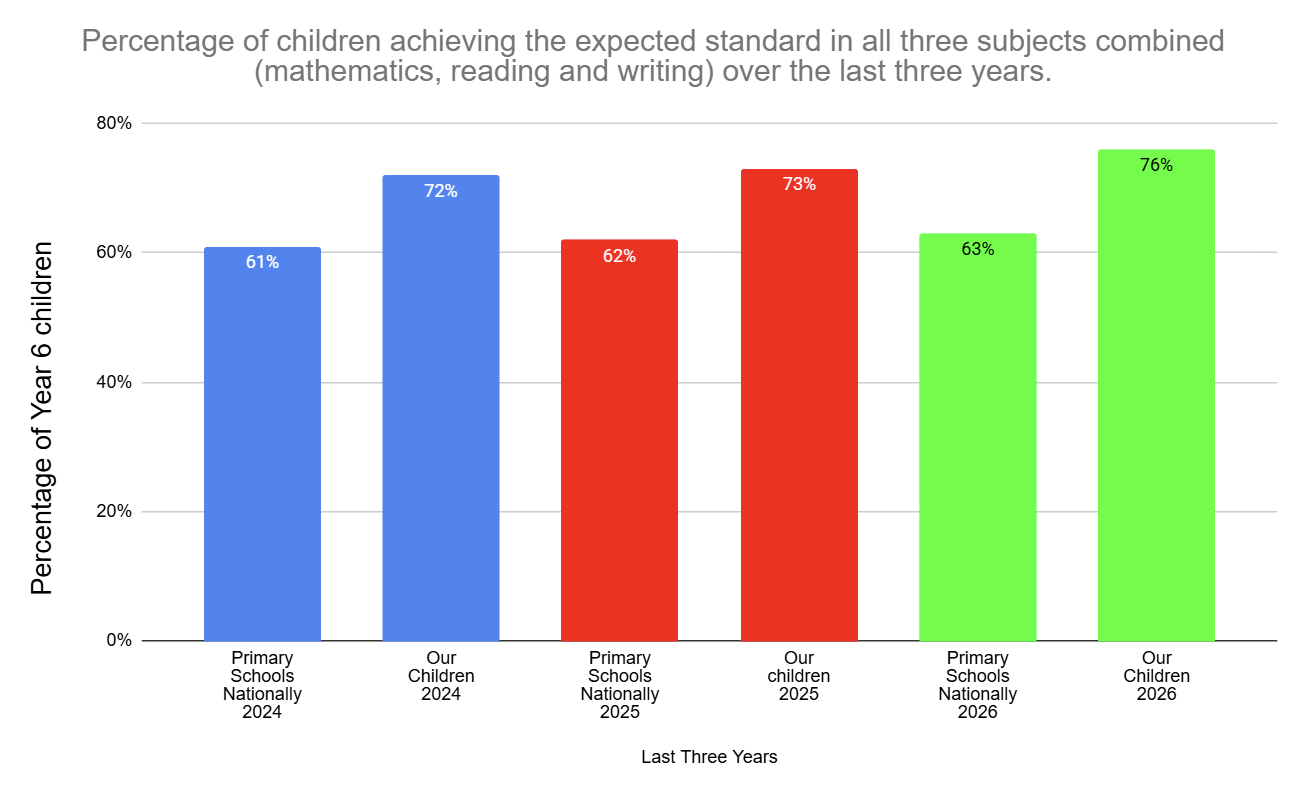
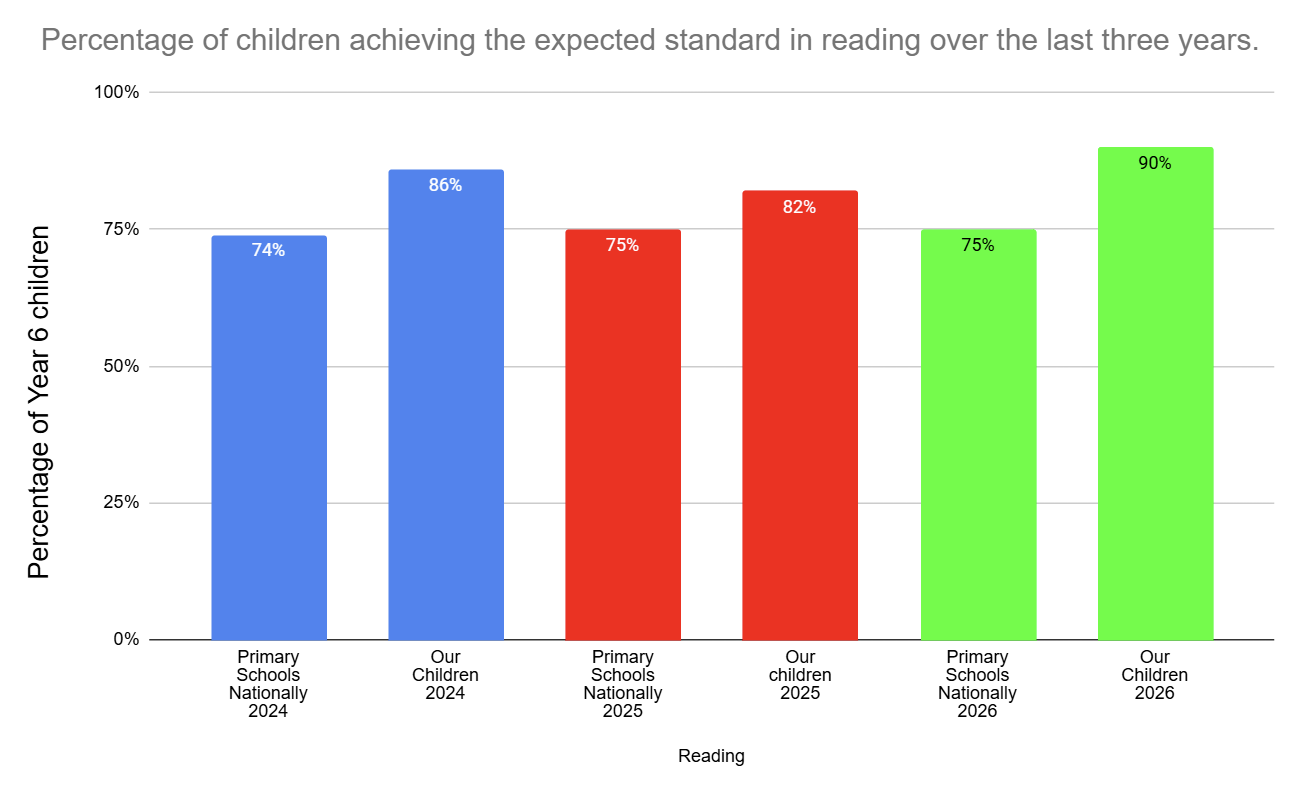
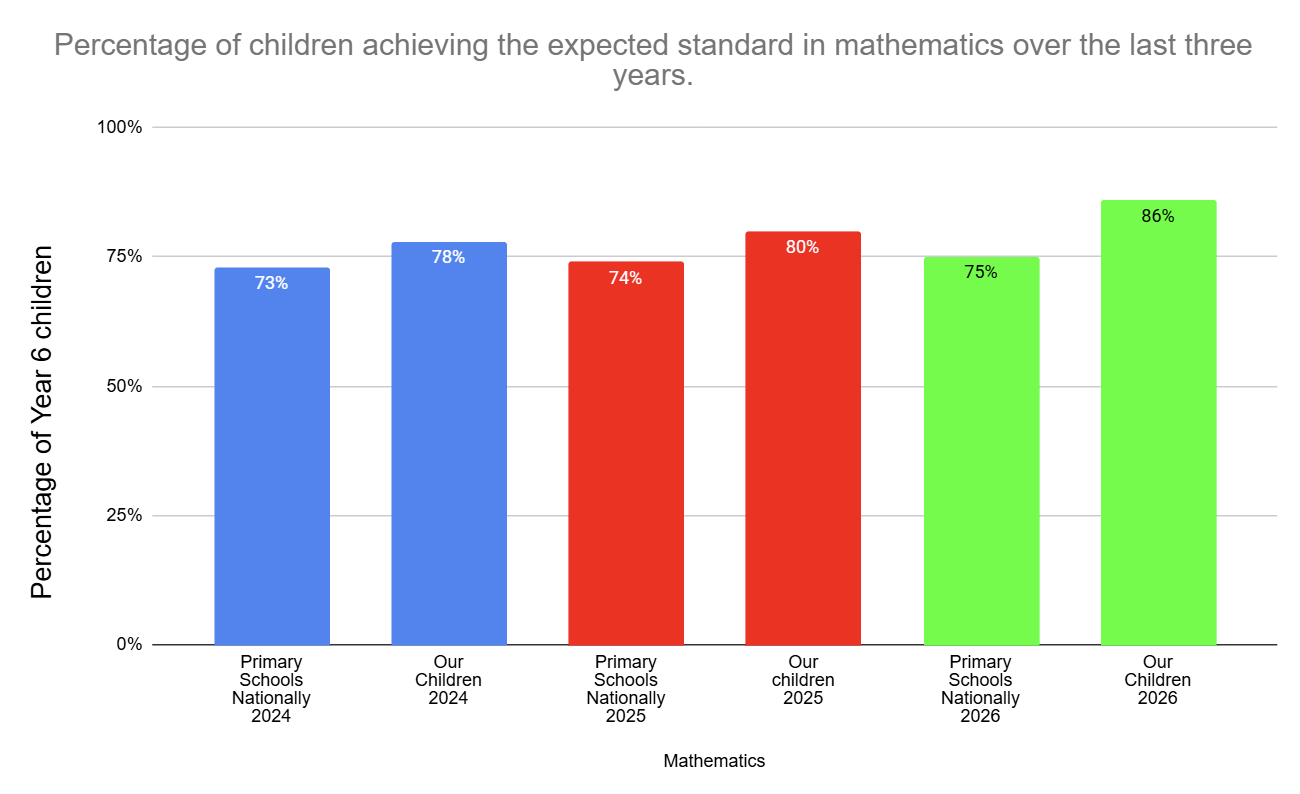
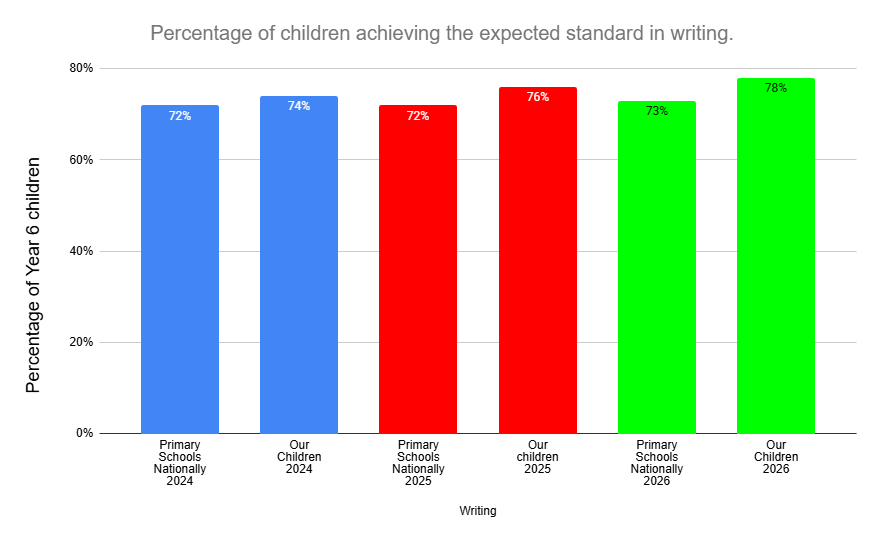
More of our children achieved the expected standard in all subjects than was the national average for the last three years running.
In Reading, our children have consistently outperformed the national average for three years running. 9 out of 10 children leave John Keble able to read at an age-appropriate standard.
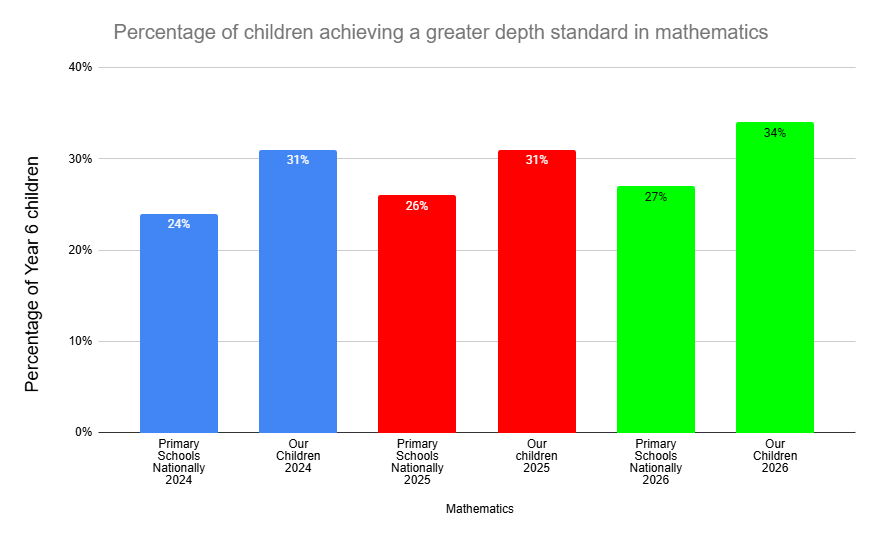
In Mathematics, our children have consistently outperformed the national average for three years running.
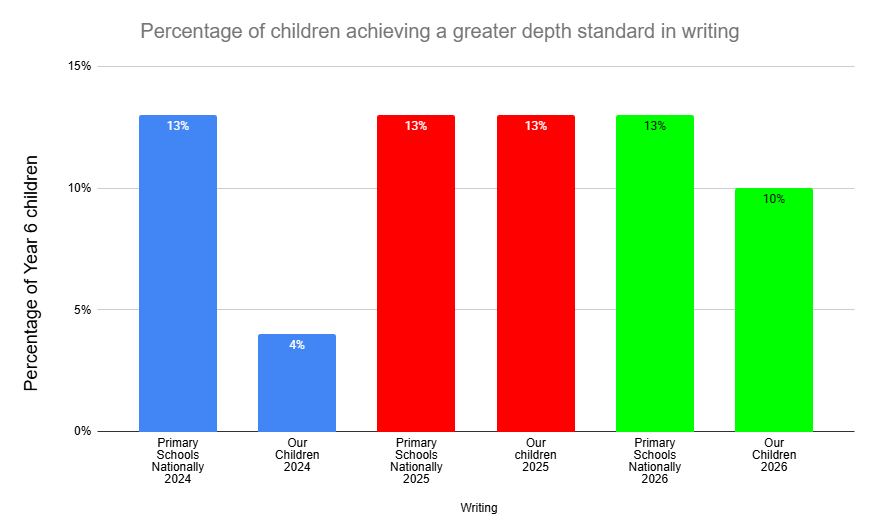
In writing, our children have consistently outperformed the national average for three years running and is getting better every year.
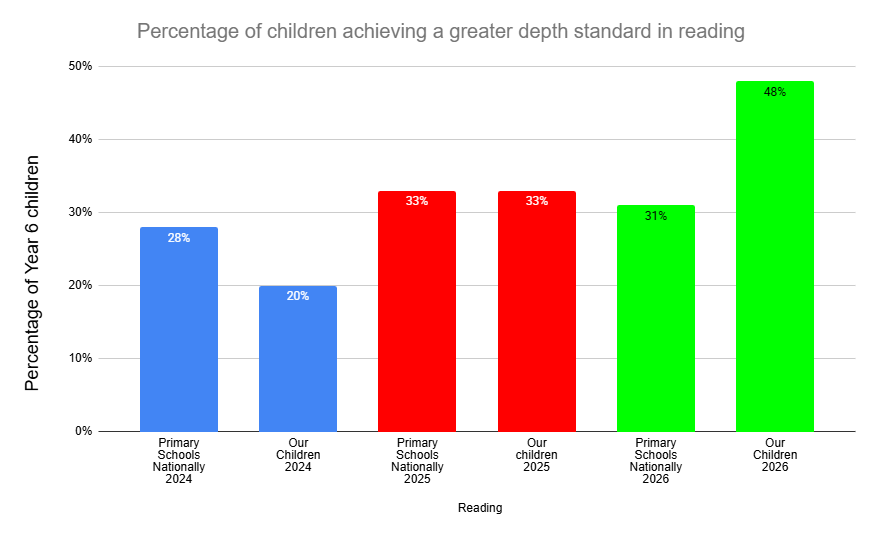
The percentage of children achieving a "Greater Depth Standard" in Reading has grown consistently for three years. We far outstripped the national average this year. Almost half of our children achieved the higher level despite national data suggesting the paper was harder than the previous year.
In mathematics, the percentage of children achieving a "Greater Depth Standard" has consistently exceeded the national average for three years. One in three children achieved this standard at John Keble.
The percentage of children who have achieved a greater depth standard in writing has been broadly in line with the national average for the last two years.
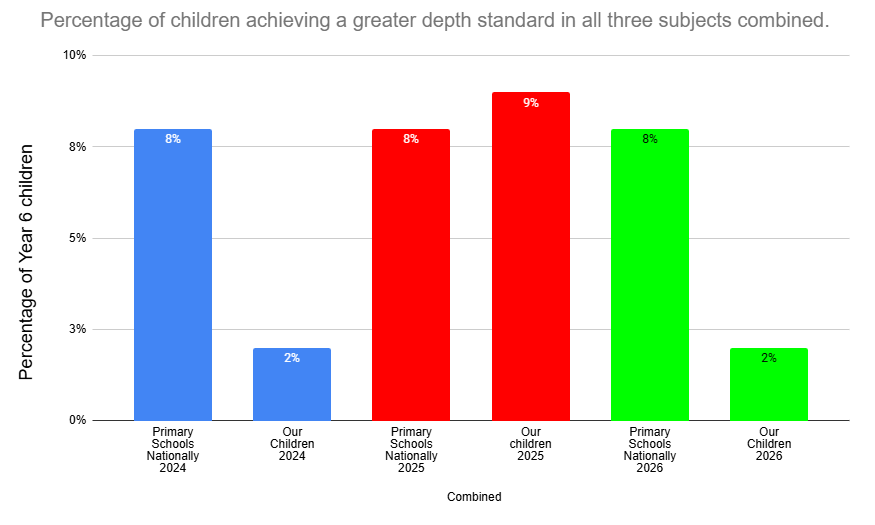
Our children who are able to achieve a "greater depth standard" do so in one or two of the subjects (reading, writing or mathematics) but not all three.
To compare our data with other schools in Brent, click here
Phonics Data
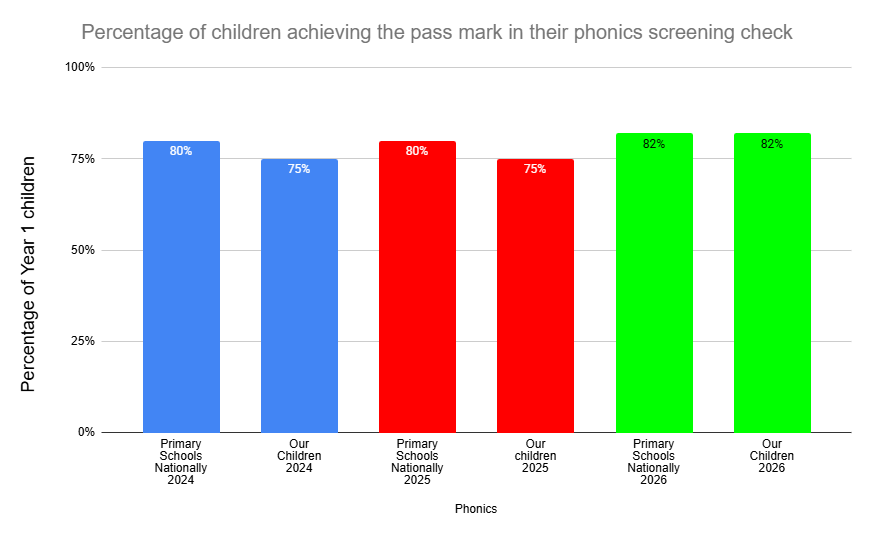
The purpose of the phonics screening check is to confirm that all children have learnt phonic decoding to an age-appropriate standard. With some exceptions, all pupils who have reached the age of 6 by the end of the school year must take the check during that academic year. For most pupils, this will be in year 1.
The phonics screening check contains 40 words divided into 2 sections of 20 words. Both sections contain a mixture of real words and pseudo-words. The check is designed to give teachers information on how your child is progressing in phonics. It will help to identify whether your child needs additional support at this stage, so that they do not fall behind in this vital early reading skill. For further information on the Phonics Screening Check, click here.
The number of children in year 1 who pass the phonics screening check is in line with the national average.
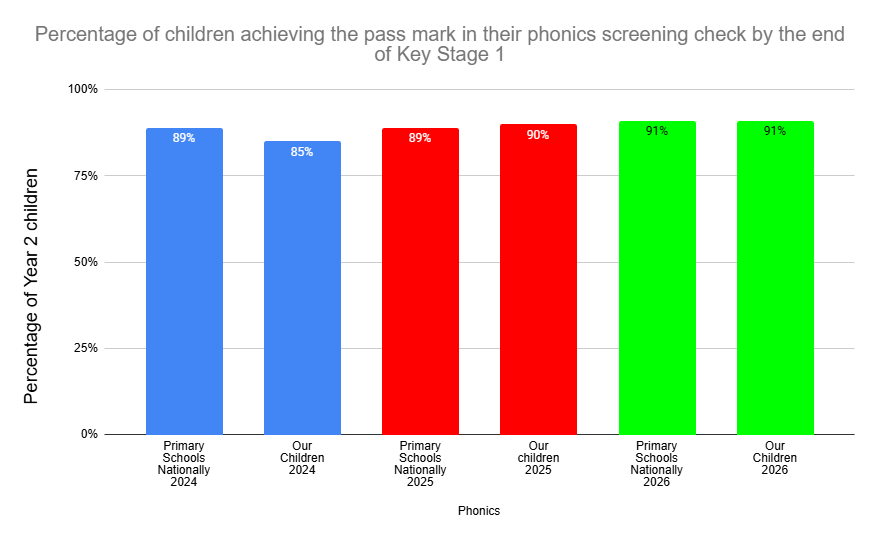
The number of children who can use phonics to read by the end of Key Stage 1 is in line with the national average.
Early Years Data
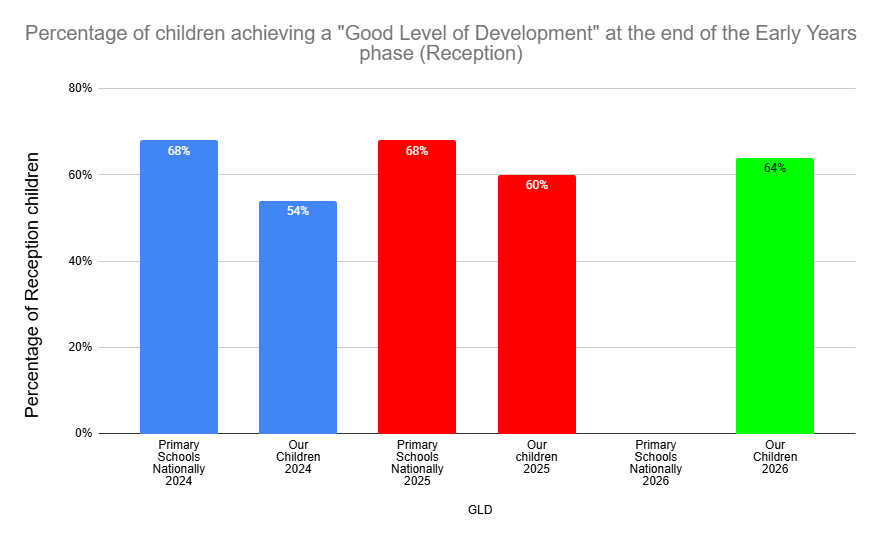
GLD stands for Good Level of Development. This refers to a judgement which is made for each child at the end of the Reception year. Children are defined as having reached a 'Good Level of Development' at the end of the EYFS if they have demonstrated that they are at the nationally expected level in the following areas:
- Personal, Social & Emotional Development
- Physical Development
- Communication and Language
- Literacy
- Mathematics