

Reading
If you think your child is having problems with their reading, the first step is always to speak to their teacher and share your concerns. Children learn at different rates, so try not to worry or let your child get anxious – that could just make it harder for them to get better.
- Make sure your child isn’t tired, hungry or desperate to watch their favourite TV show when you read to them. Sit with them for a short time every day and read a book about something they’re interested in, whether that’s cars, animals or sports. Don’t expect them to read it themselves, but try to show them how interesting reading can be so that they start wanting to.
- Lots of children, especially boys as they get older, would rather read non-fiction books than fiction, so it could be as simple as changing the type of books that you read together. Talk to their teacher or a librarian to see what books might match your child’s interests.
- Give them lots of praise. Let your child know how pleased you are when they look at a book and show that you’re interested in what it’s about. It’s important to remember that children all develop at their own pace when it comes to reading.
My child isn't interested in reading books - what can I do?
1. Encourage your child to read
Reading helps your child’s wellbeing, develops imagination and has educational benefits too. Just a few minutes a day can have a big impact on children of all ages.
2. Read aloud regularly
Try to read to your child every day. It’s a special time to snuggle up and enjoy a story. Stories matter and children love re-reading them and poring over the pictures. Try adding funny voices to bring characters to life.
3. Encourage reading choice
Give children lots of opportunities to read different things in their own time - it doesn’t just have to be books. There’s fiction, non-fiction, poetry, comics, magazines, recipes and much more. Try leaving interesting reading material in different places around the home and see who picks it up.
4. Read together
Choose a favourite time to read together as a family and enjoy it. This might be everyone reading the same book together, reading different things at the same time, or getting your children to read to each other. This time spent reading together can be relaxing for all.
5. Create a comfortable environment
Make a calm, comfortable place for your family to relax and read independently - or together.
6. Talk about books
This is a great way to make connections, develop understanding and make reading even more enjoyable. Start by discussing the front cover and talking about what it reveals and suggests the book could be about. Then talk about what you’ve been reading and share ideas. You could discuss something that happened that surprised you, or something new that you found out. You could talk about how the book makes you feel and whether it reminds you of anything.
7. Bring reading to life
You could try cooking a recipe you’ve read together. Would you recommend it to a friend? Alternatively, play a game where you pretend to be the characters in a book, or discuss an interesting article you’ve read.
8. Make reading active
Play games that involve making connections between pictures, objects and words, such as reading about an object and finding similar things in your home. You could organise treasure hunts related to what you’re reading. Try creating your child’s very own book by using photos from your day and adding captions.
9. Engage your child in reading in a way that suits them
You know your child best and you’ll know the best times for your child to read. If they have special educational needs and disabilities (SEND) then short, creative activities may be the way to get them most interested. If English is an additional language, encourage reading in a child’s first language, as well as in English. What matters most is that they enjoy it.
My son just isn’t interested in reading – what can I do?
Research shows that boys are less likely to enjoy reading than girls. More boys than girls struggle with reading and writing at school, and boys are more likely to say they don’t spend any time reading outside the classroom. But there are ways you can help:
- Make sure that you’re reading something with your son which interests him. Many boys like non-fiction books, so try asking at your local library for recommendations – he might enjoy reading Horrible Histories or the Guinness Book of Records more than fiction.
- Role models are important too. It helps if boys see their dads, uncles or granddads reading, even if it’s a newspaper, so that it seems familiar and they can copy their reading behaviour.
- Always praise your son when he reads something well. Equally, if he reads something incorrectly, don’t make him feel bad – mistakes are all part of the learning process.
My child is sounding out every word - what can I do to help?
If you think your child is having problems with their reading, the first step is always to speak to their teacher and share your concerns. Children learn at different rates, so try not to worry or let your child get anxious – that could just make it harder for them to get better.
- Remind the child to memorise words which occur frequently, say e.g. You saw this word on the last page. What was it? Read it all smoothly. Let’s put this together. Can you read this quickly? Can you remember this word for tomorrow?
- Read a line of text and ask the child to repeat - model fluent and expressive reading.
My child is struggling to blend the different sounds together - what can I do?
If you think your child is having problems with their reading, the first step is always to speak to their teacher and share your concerns. Children learn at different rates, so try not to worry or let your child get anxious – that could just make it harder for them to get better.
- Ask the child to sound out the same word repeatedly and quickly so they can hear it for themselves. Alternatively, sound out for the child and have them say the word.
- Look for digraphs in words, e.g. "sh-i-p", "K-i-pp-er", "ch-i-n".
- Ask the following questions: Can you hear this sound? (exaggerate/stretch the sound) Can you hear the last part of ‘looking?’ Does that sound right to you? What sound does it make? What is its name?
My child is guessing a lot of words - what can I do to help?
If you think your child is having problems with their reading, the first step is always to speak to their teacher and share your concerns. Children learn at different rates, so try not to worry or let your child get anxious – that could just make it harder for them to get better.
- Explain that it's ok to guess words when talking about the story from pictures/predicting the ending etc., but during reading the child needs to read every word carefully.
- Ask the following questions to guide the child to self-correcting: Did you check the first letter? Did it match? You made a mistake in this line. Can you find it? You said... . Did it make sense? How did you know it said…?
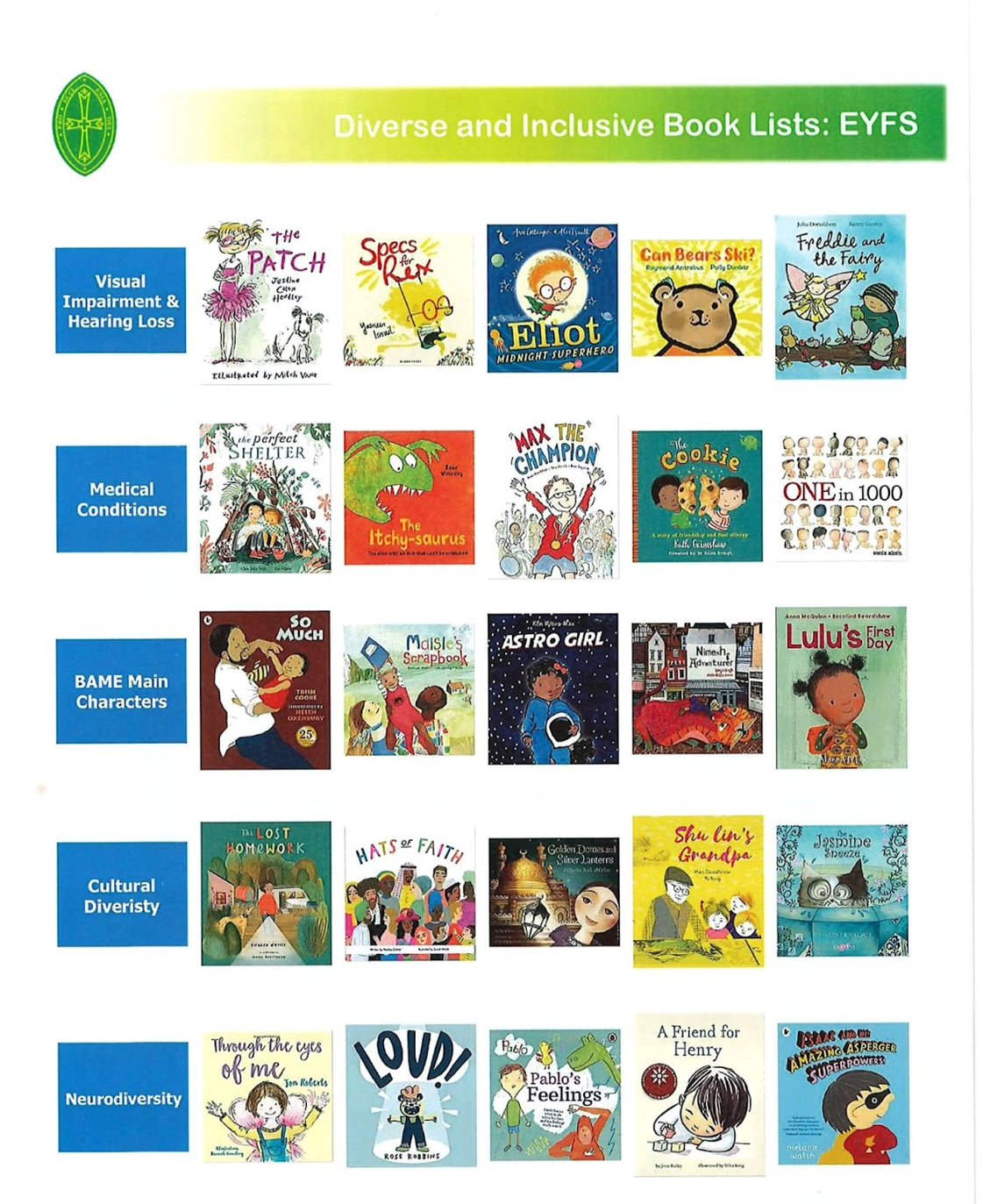
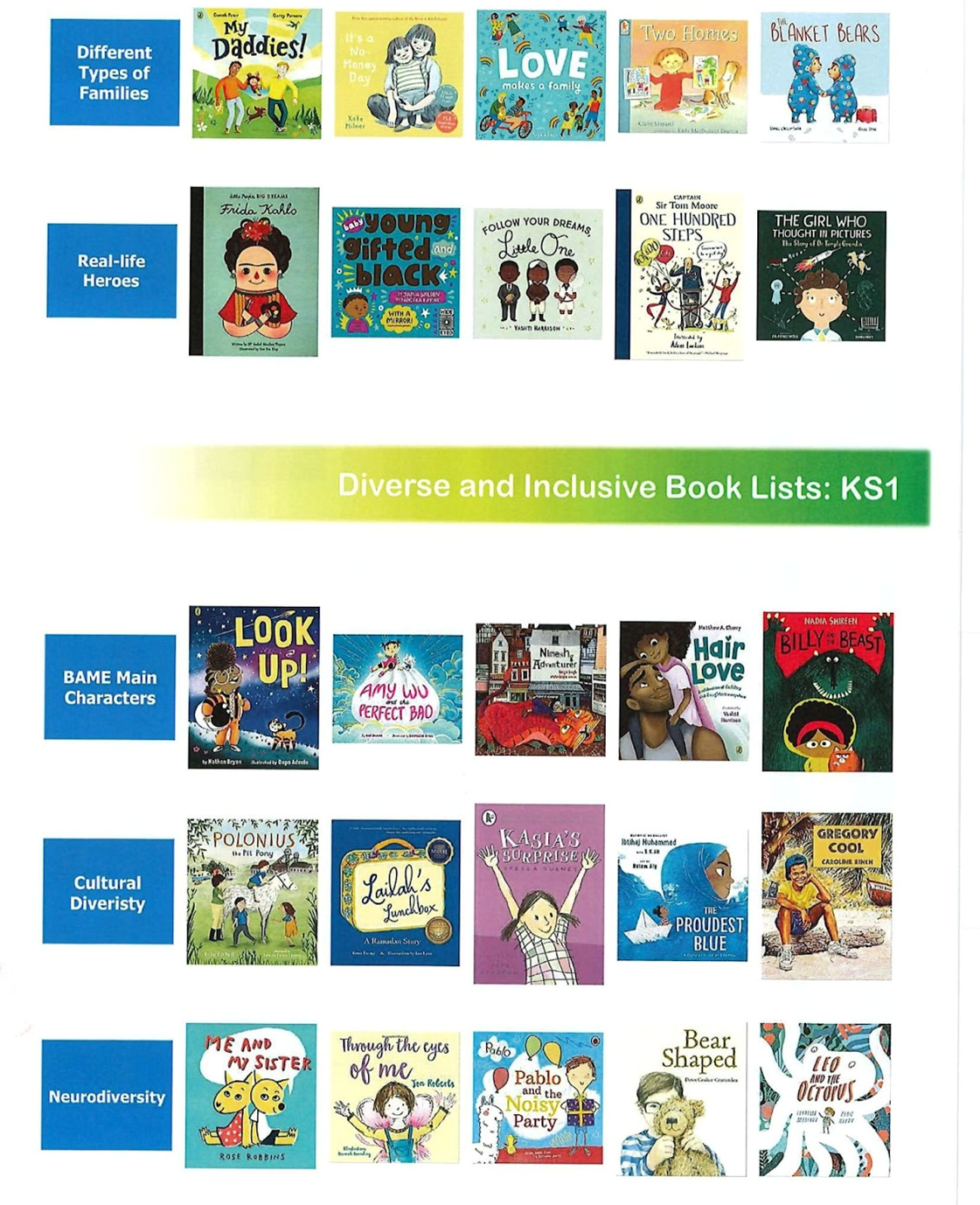
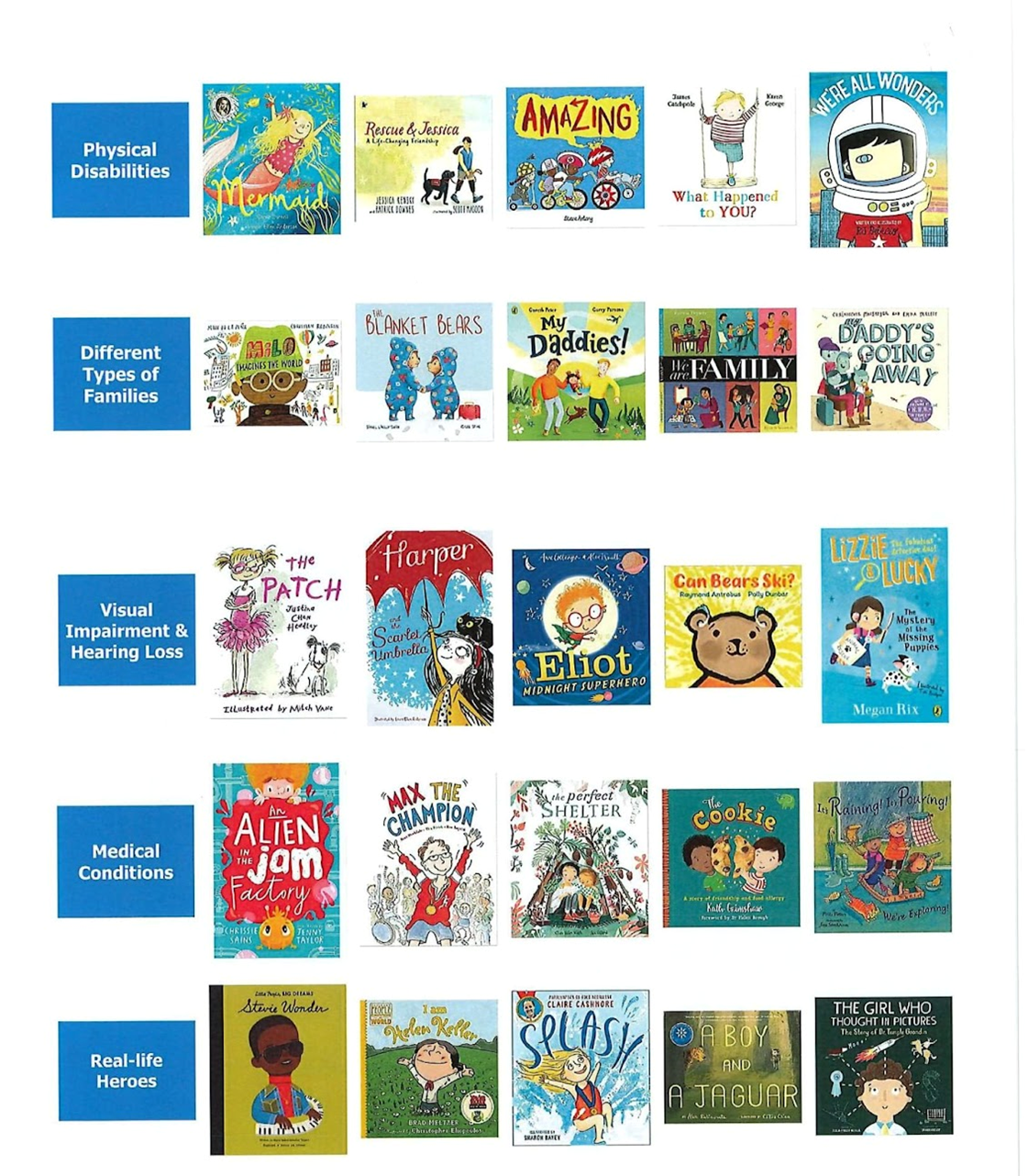
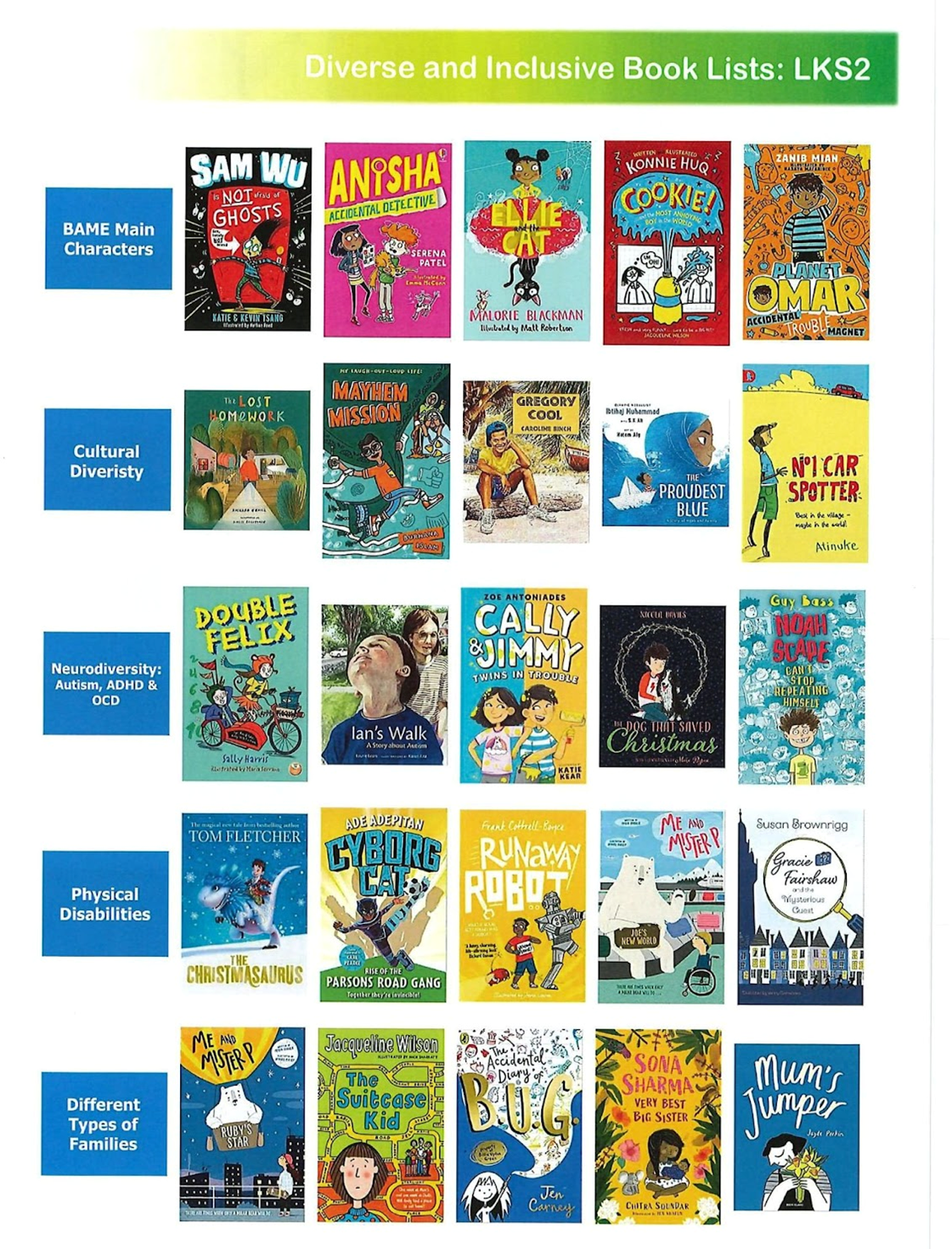
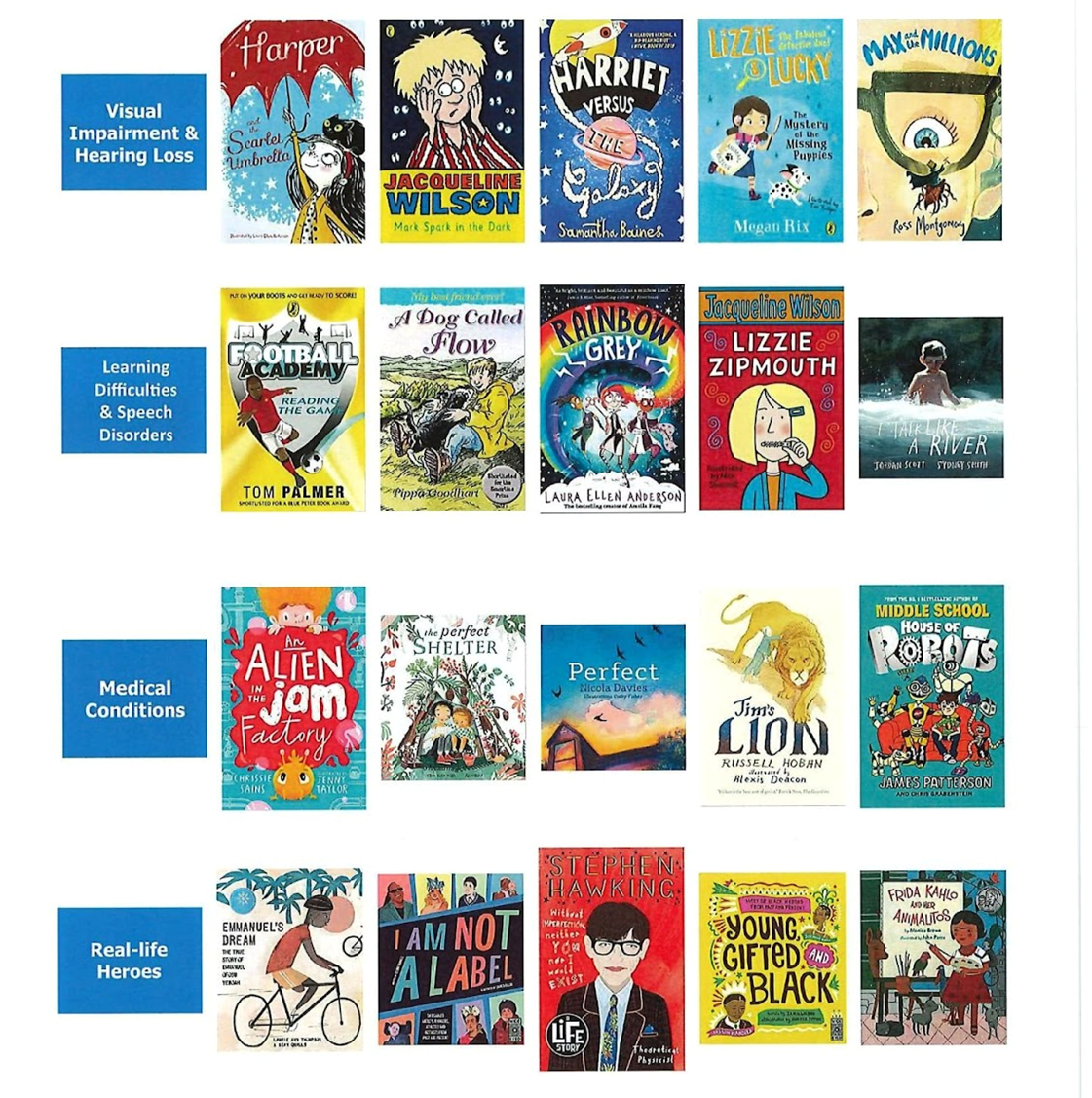
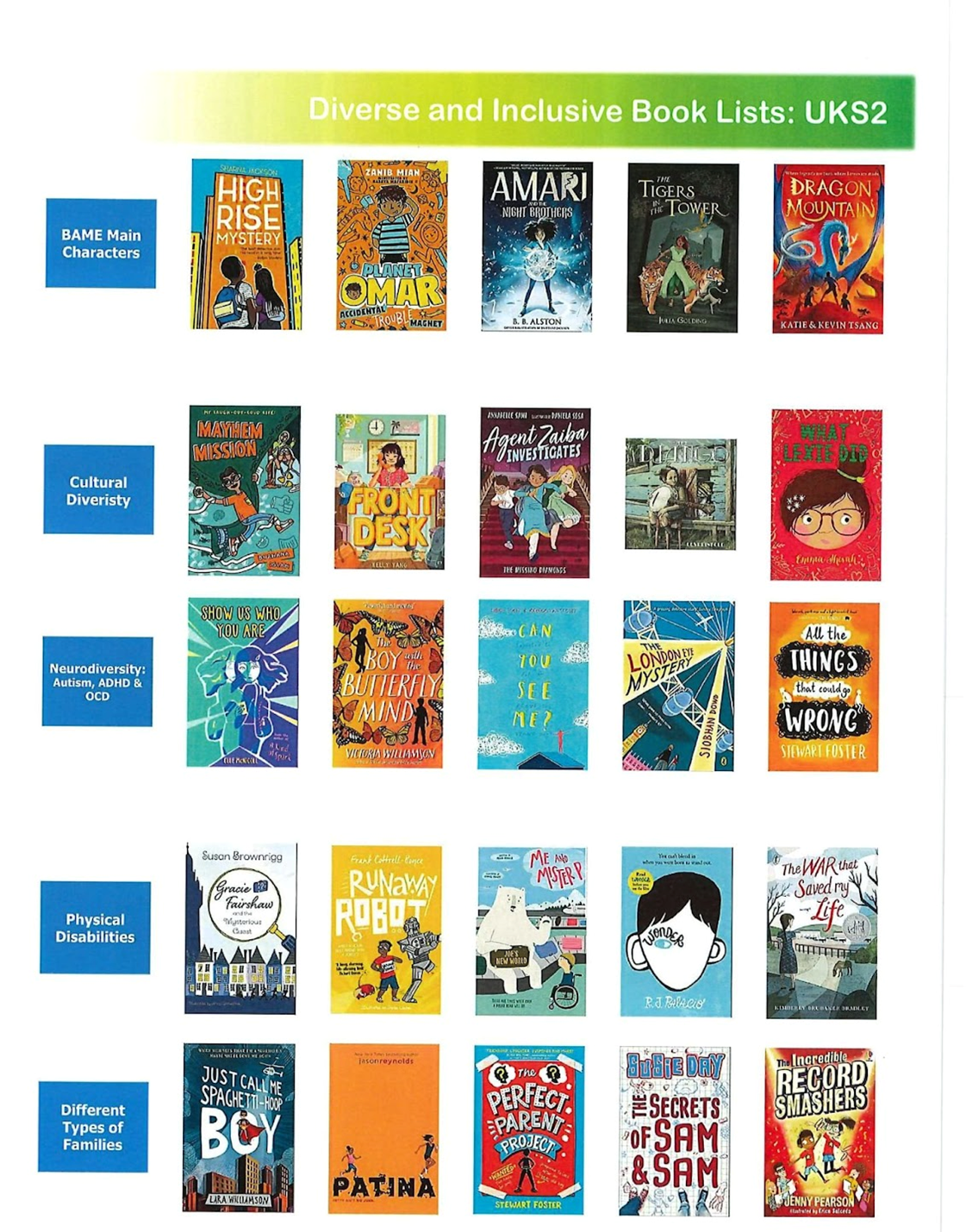
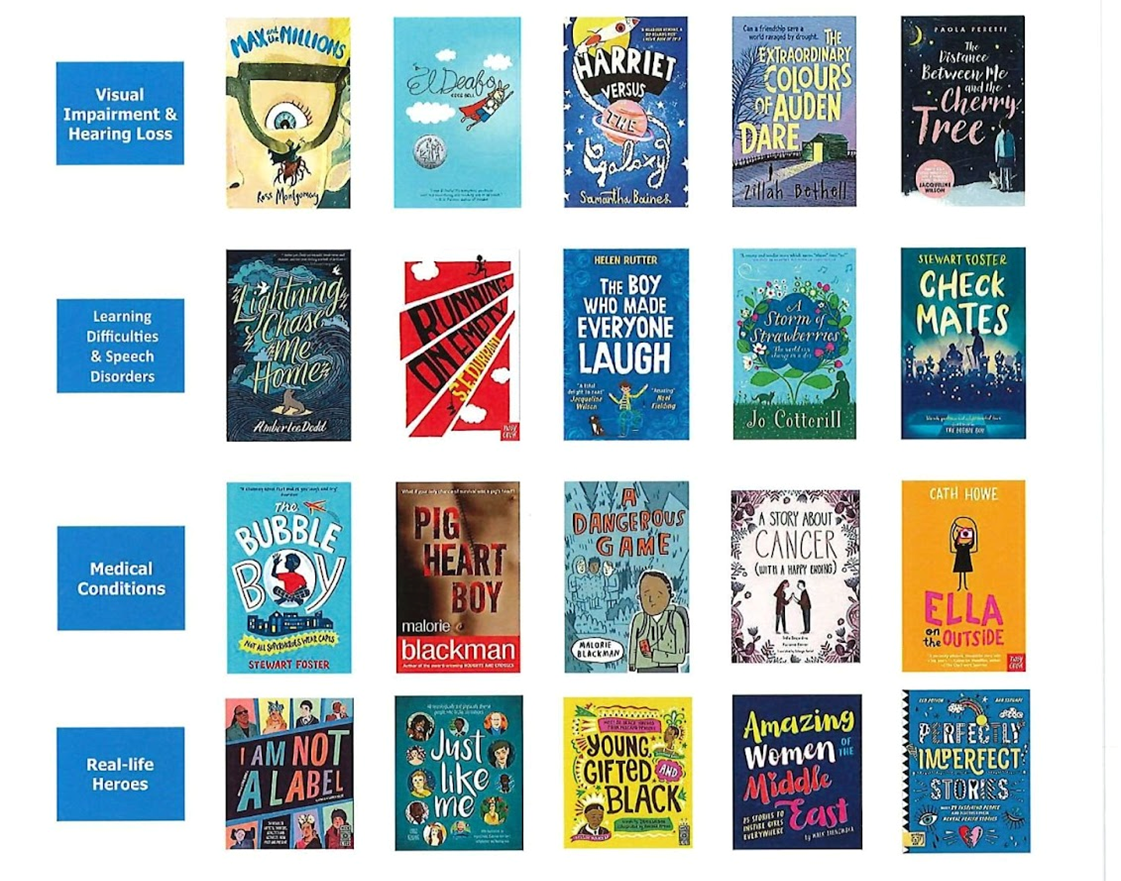
My child can't find any books that reflect his or her life?
Here are some recommendations:
Teaching Reading at John Keble
Beginning to Read
 In EYFS and KS1 children begin their reading journey by learning phonics. At John Keble we use the Little Wandle Letters and Sounds Revised programme which is well established. More information about how we teach phonics can be found by clicking on the icon above.
Early Reading
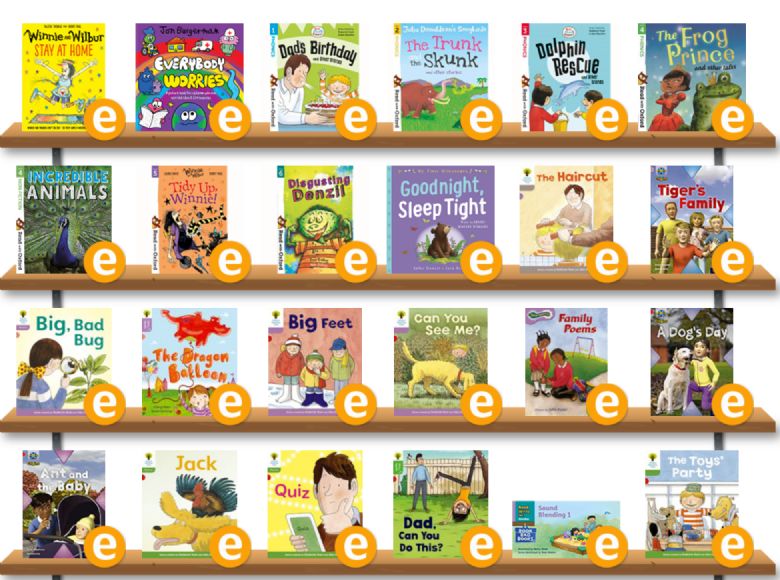
All children in school are provided with a class reading book to take home which is appropriate to their current reading age. Their reading age is established by the teacher using a system of assessment known as PM Benchmarking. This involves:
- listening closely to a child read, carefully checking each word they can and cannot recognise,
- observing how the children use the punctuation cues to pause and add expression,
- recording the number of words per minute speed the child is reading at.
- establishing how much of the book they have understood by asking a series of verbal comprehension questions. As the child progresses these will also reflect upon how much the child is able to infer (read between the lines) and predict.
Children are assessed regularly using this system in conjunction with their daily class work to ensure the children are taking home a reading book at an appropriate level. To ensure we cover a wide range of interests we make use of several publishers' reading libraries including Oxford Reading Tree and PM Benchmarking.
The children are also invited to select another reading book of their own choice from the classroom reading corner to help foster a love of reading. We call this their "Bedtime Book". This book is intended to be shared with their family - they might read it to you or enjoy having this book read to them by you.
Oxford Owl provide a huge selection of free e-books and activities to read via their website. Simply sign up (it's free) to view.

Developing Reading
After the children have completed their Phonics Screening Check to a suitable standard, children continue their journey to learn from Year 2 onwards using a programme written by the Literacy Counts company called Read, Steady Read. It involves daily 45-minute sessions in which the teacher models reading, comprehending and interpreting texts to the whole class before the children apply these skills independently. Through teacher modelling of expression, pace, intonation and prosody, children learn how skilled readers bring meaning to a text and how these features support comprehension. Shared reading also creates opportunities for discussion, questioning, drama and exploration of language, which deepen comprehension whilst enhancing oracy skills. Crucially, it ensures that every child, regardless of their decoding ability, can engage with ambitious texts and develop the habit of reading widely and often for both pleasure and learning.
This resource provides dynamic and inclusive lessons that integrate metacognitive strategies and feature diverse literature from exceptional authors. It aims to inspire children and families to develop a lifelong love of reading for pleasure, knowledge and information. Ready Steady Read Together gives every pupil access to high-quality texts, enabling them to experience literature that develops fluency, vocabulary and understanding.
Each class has specific Ready Steady Read Together vehicle texts with suggested supplementary books to support the themes and encourage reading for pleasure.
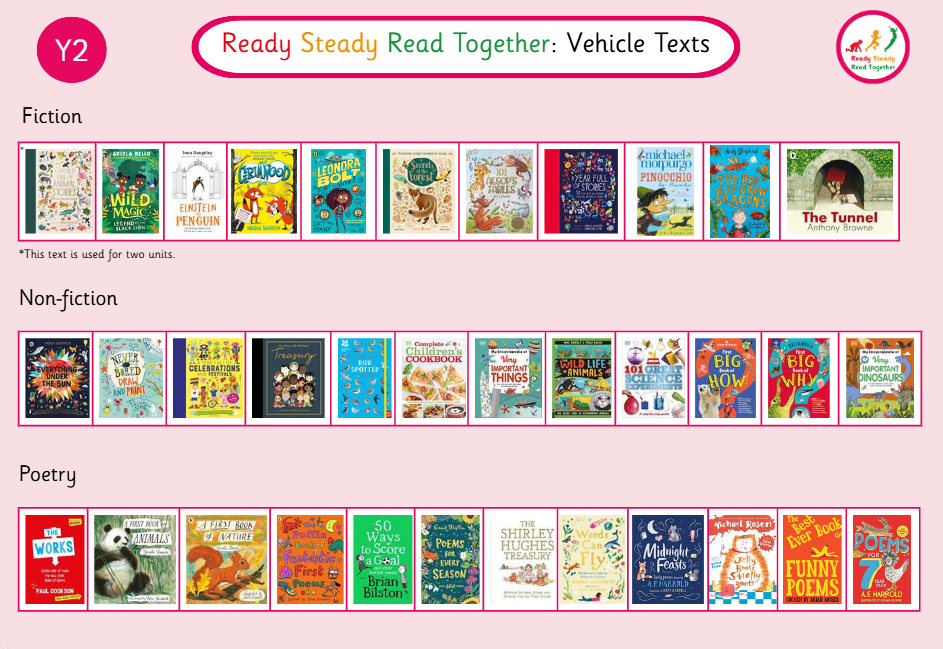
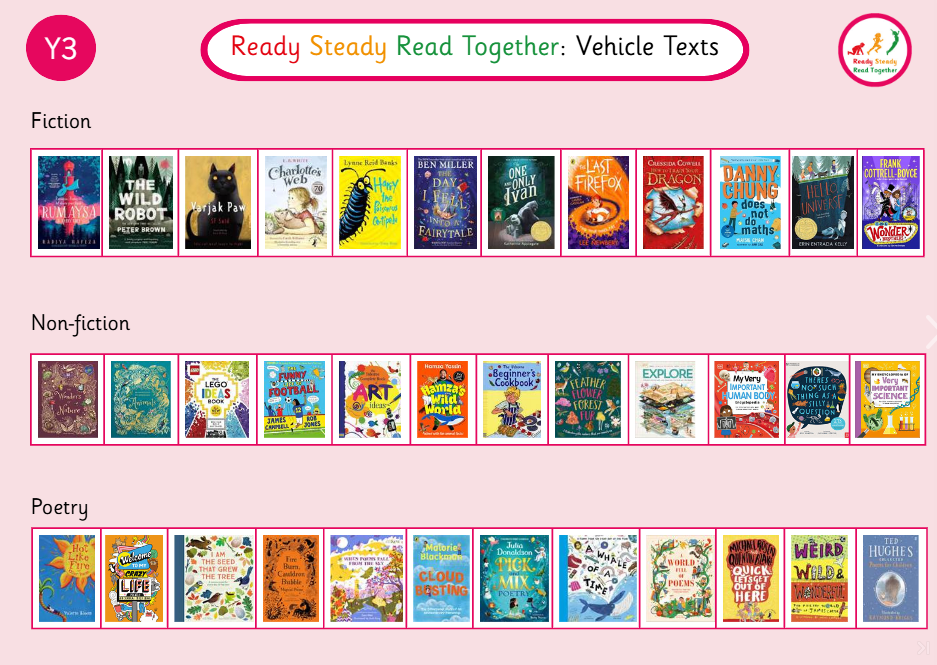
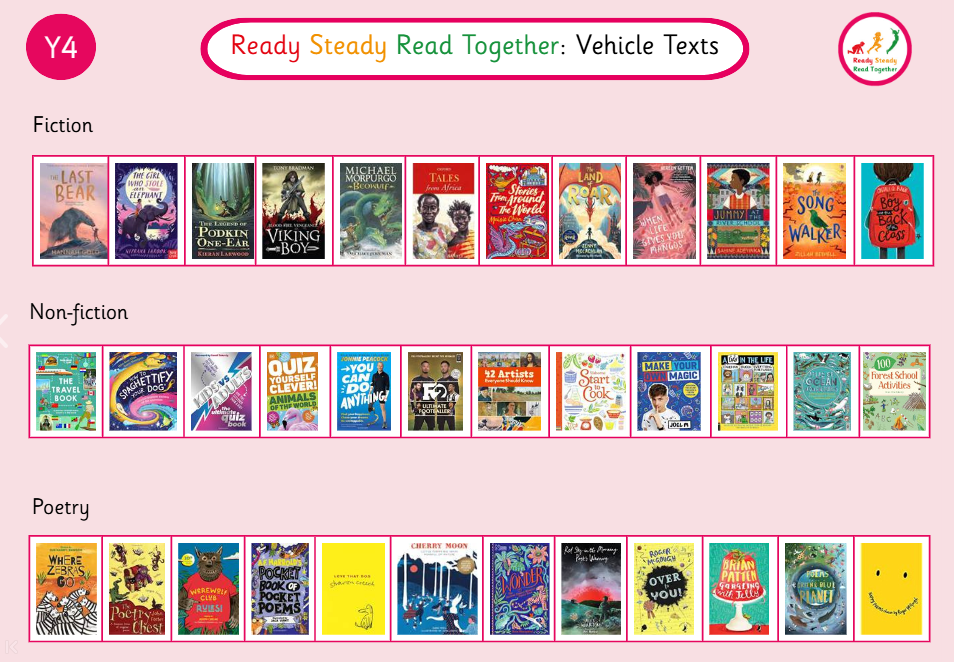
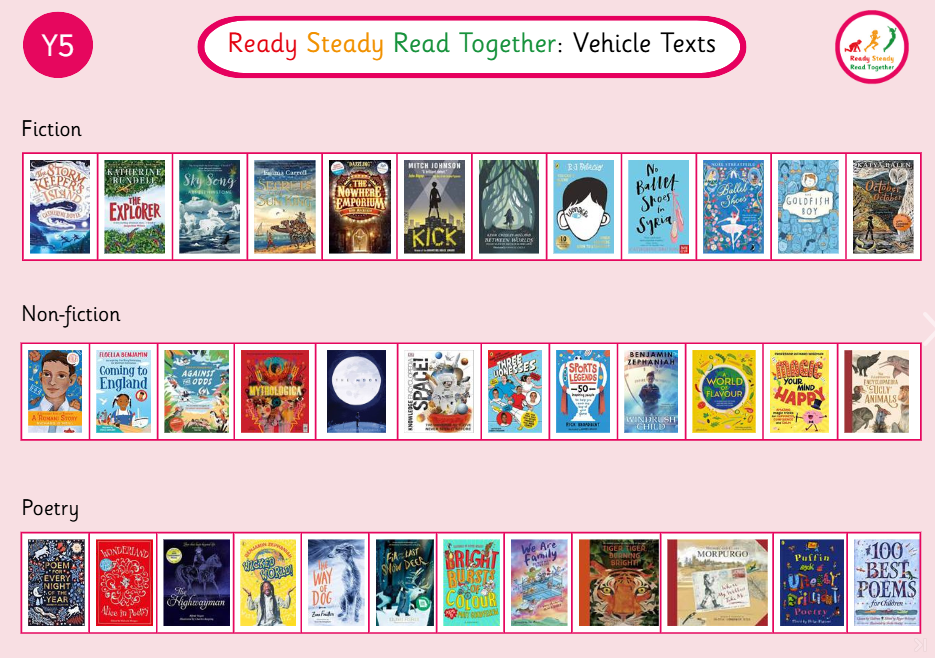
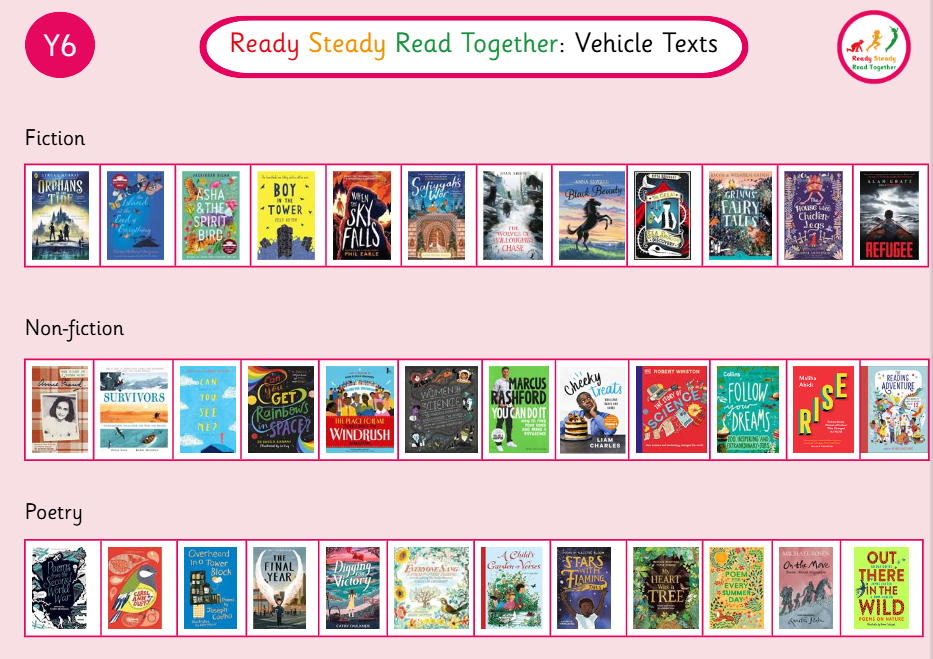
To view more information about the texts used in each year, please download the document at the foot of the page.
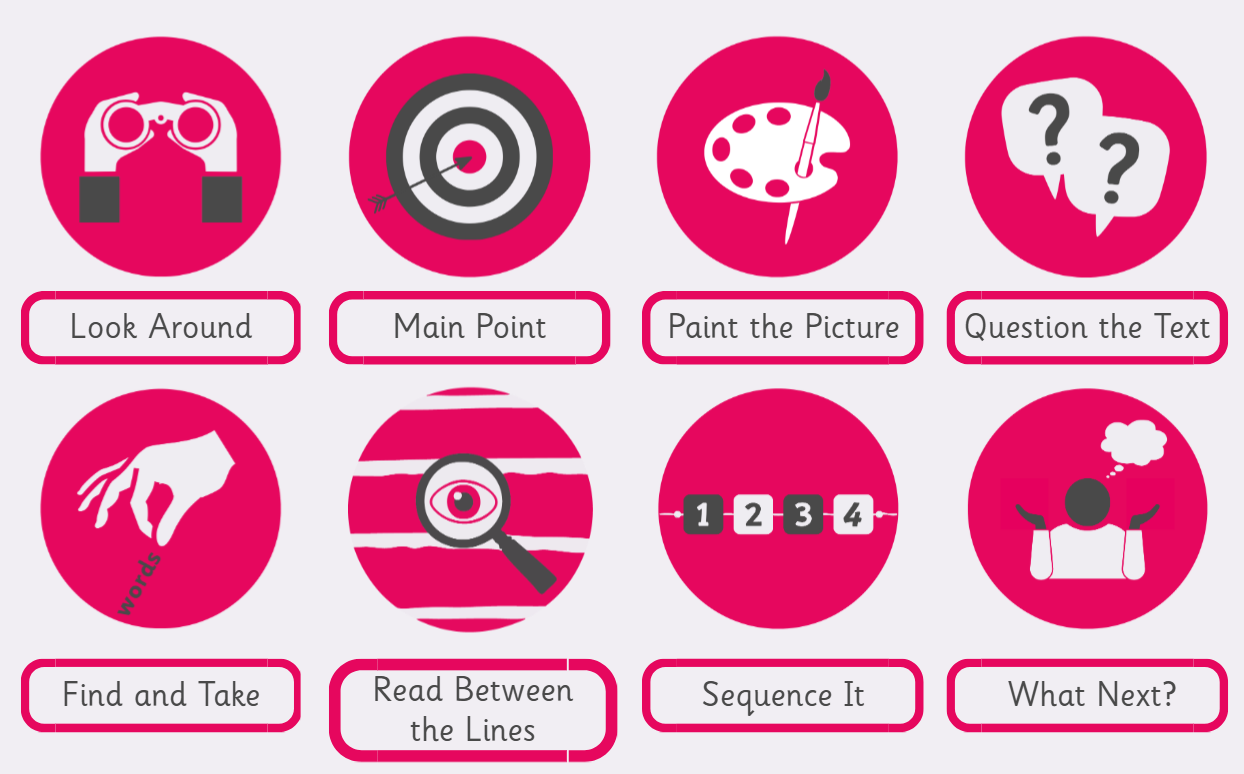
What strategies do we teach the children to help them understand what they are reading?
Click on the strategies below to reveal further information about how children use the following strategies to help them comprehend what they are reading.
Assessment
Teachers use daily formative assessment through observation, questioning and feedback to stretch and challenge pupils and to identify those who need additional support. A checklist at the bottom of the Pupil Practise and Apply booklet allows teachers to indicate specific areas of difficulty. In addition to this feedback, a low-stakes quiz is completed in the fifth lesson each week, giving children the opportunity to apply the strategies and skills they have been developing.
Throughout the academic year , three assessments are carried out in each year group (October, February and May), that enable gap analysis. By identifying next steps, the tool helps teachers and leaders target teaching and explicitly model the required skills and strategies in subsequent lessons. Subject leaders analyse termly data and address areas for development. Attainment, progress and barriers to learning are reviewed in termly pupil progress meetings, where clear actions are agreed to close gaps, particularly for pupils in the bottom 20%.
Ensuring the children's reading ability progresses.
Although we often link the texts between the two lessons, Reading lessons are taught in addition to our Writing lessons at John Keble.
We understand that to foster a love of reading, the children need to be given as much opportunity to read as possible. It is therefore the first activity of the day for every child at the school.

When you’re able to visit your local library to explore all sorts of reading ideas. Local libraries offer brilliant online materials, including audiobooks and ebooks to borrow. Libraries Connected is also a brilliant digital service that families can make use of.
Are there any useful websites I can visit for further advice?


Lots of e-books for the children to read for free as well as lots of useful advice for parents too.

Hundreds of extracts from books that help the children to choose what next to read.

The Book Trust has plenty of helpful articles guiding parents and teachers.

A good website with a broad range of games to play.
Alternatively, download this leaflet from Pearson about reading with your child.